
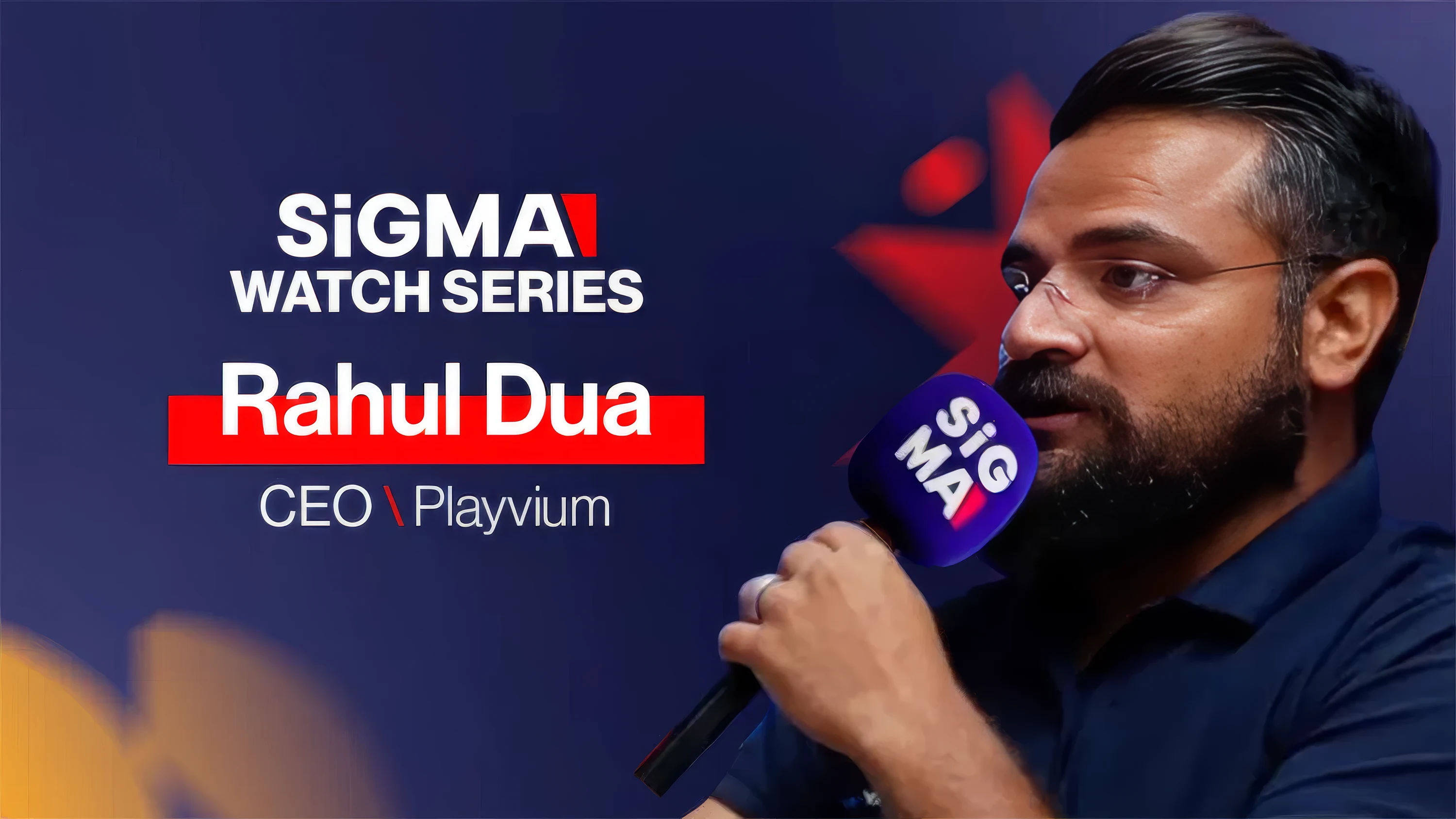
At SiGMA Asia 2026, I sat down with SiGMA to talk about something I keep seeing across almost every market we operate in.
Operators fail. A lot of them. Not because the industry is bad, but because they don't understand what they're signing up for.
From the outside, running an online casino looks like a fantasy. Big numbers, fast growth, global reach. But the reality is that roughly 9 out of 10 operators don't make it past the first year. And most of them fail for the same reason.
They don't own what they're operating.
The Rental Trap
Most new operators start with a white-label or rental model. Someone else owns the platform. Someone else controls the content. Someone else decides when you can launch a new product, which payment providers you can use, and what data you get to see.
On paper, it looks like a shortcut. In practice, it's a ceiling.
You want to launch your own content? You need your vendor's permission. You want to change your bonus structure? You wait for their roadmap. You want to switch payment gateways for a new market? You're told it's not supported.
I told SiGMA this plainly: if you don't have control over your own platform, you're in a trap. The longer you stay, the harder it gets to leave.
Owning the Hotel, Not Renting a Room
At Playvium, we see platform ownership the way you'd see owning a hotel versus renting a room in someone else's. When you own the building, you decide the rates, the staff, the experience, the expansion plan. When you rent, you operate within someone else's rules and pay for the privilege every month.
That's what a revenue-share model looks like at scale. An operator doing $500K a month in GGR on a 20% revenue share is handing over $100K a month to their technology provider. That's $1.2M a year. Every year. With no end date.
We built Playvium around a different model. Operators can own the full source code from Day 1. Zero platform revenue share. The platform pays for itself within months, and everything after that belongs to the operator.
What GCC and Asian Markets Have in Common
During the interview, I also talked about what we're seeing across the GCC and Asia. Regulation is different in both regions, that's obvious. The UAE is building its licensing framework now, while each Asian market has its own structure and commercial rhythm.
But operators in both regions face the same operational challenge: user acquisition is expensive, retention depends on local content, and mobile is the primary access point. Not a secondary channel. The platform.
For operators running in multiple jurisdictions, this is where data visibility becomes critical. You need a single reporting layer that shows which markets are producing returns, which content is performing, and where your GGR is weakening. Without that visibility, you're making expansion decisions on instinct instead of evidence.
What We're Building Toward
Playvium is not just a technology provider. We think of ourselves as a long-term partner. When an operator comes to us, we're not looking at a 6-month transaction. We're looking at a 3 to 5 year plan: where they want to operate, how they want to grow, and what infrastructure they need to get there.
We offer three commercial models, from full ownership to rental to white-label, because operators are not all in the same position. But the goal is the same across all three: give the operator as much control as their capital and capacity allow, and build a path toward full ownership over time.
That's the conversation I had at SiGMA Asia. The full interview is below.
Author: Rahul Dua
CEO, Playvium